9922423620
sales@infinitythermotech.com
Talawade, Pune-412114
In heavy-duty industrial applications, components are routinely exposed to high contact stress, friction, impact loading, and cyclic fatigue. Premature surface wear, tooth breakage, and fatigue failure are common challenges—especially in power transmission and motion-control systems. The Gas Carburizing process is one of the most widely used and proven heat treatment methods for producing hard, wear-resistant surfaces combined with a tough, shock-resistant core.
At Infinity Thermotech Solutions Private Limited, we provide precision-controlled gas carburizing process services in Pune, delivering consistent case depth, uniform hardness, and repeatable metallurgical results. Our expertise helps manufacturers enhance component durability, reliability, and lifecycle performance across demanding industrial environments.
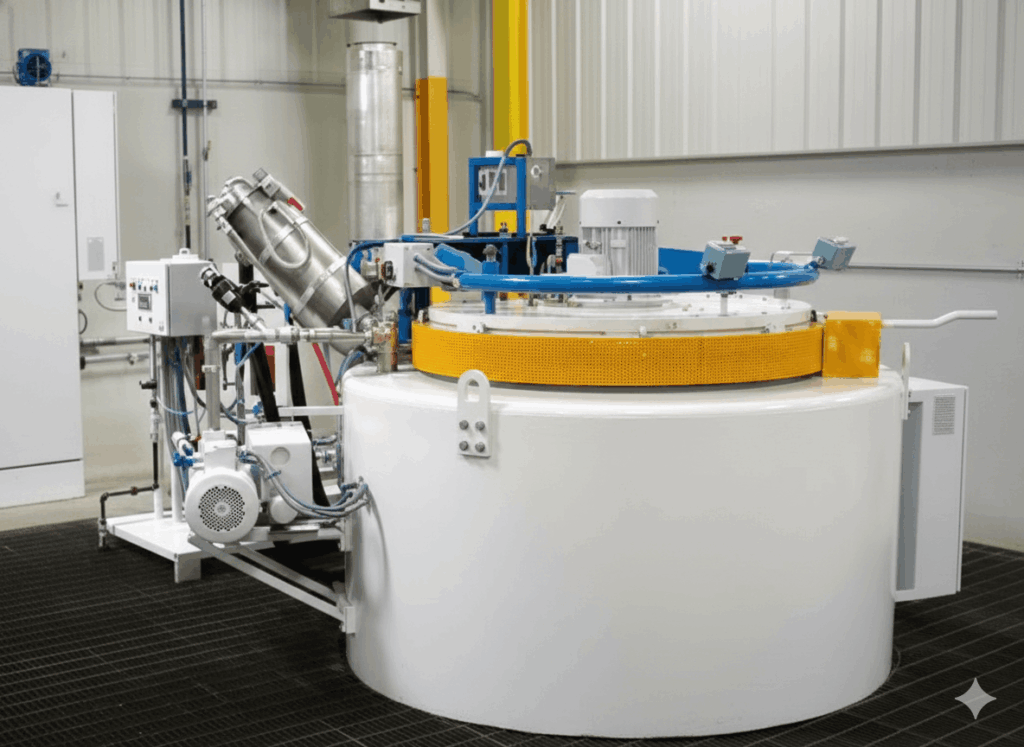
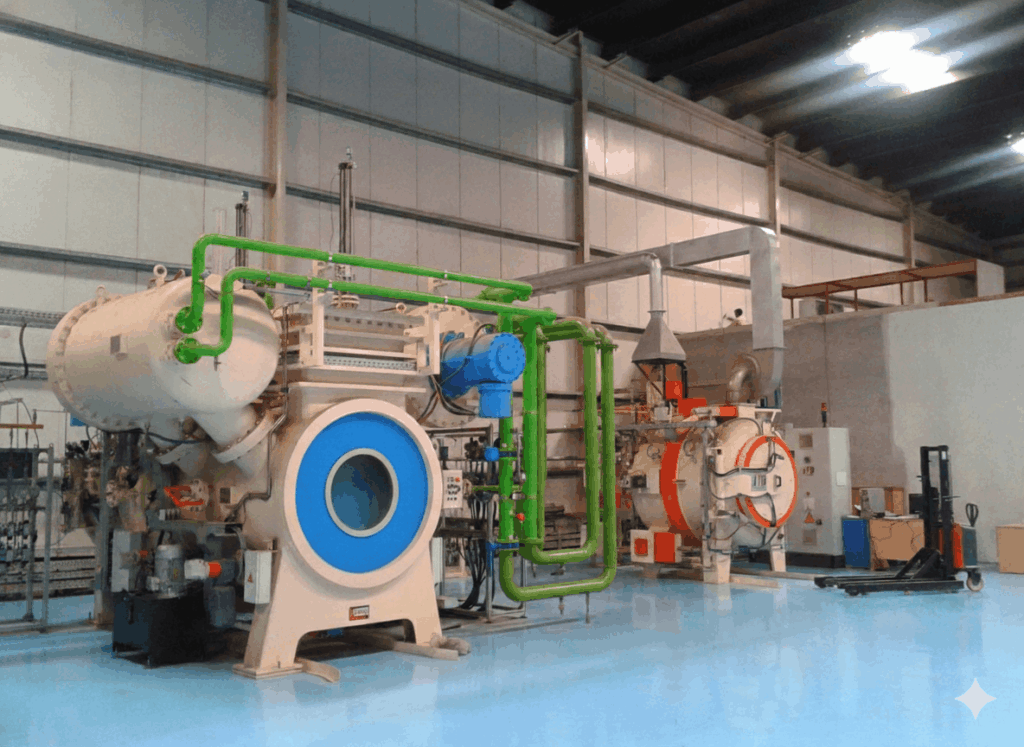
Gas carburizing is ideally suited for low-carbon and low-alloy steels, including:
Our metallurgical team assists customers in selecting the optimal steel grade and case depth based on load conditions, wear requirements, and service life expectations.
Gas carburizing is a thermochemical case hardening process in which carbon is diffused into the surface of low-carbon or low-alloy steel components at elevated temperatures, typically between 880°C and 950°C, using a controlled carbon-rich gaseous atmosphere.
At Infinity Thermotech, gas carburizing is carried out using strictly controlled furnace atmospheres and process parameters to ensure predictable outcomes and industry-grade quality.
Gas carburizing is widely used for components that require deep case depth, high surface hardness, and excellent fatigue resistance.
Excellent resistance to wear, pitting, and scuffing.
Absorbs shock loads and impact stresses without cracking.
Ideal for components subjected to cyclic and rolling contact loads.
Tailored to specific load-bearing and wear requirements.
Achieves premium properties using economical steel grades.
Gas carburizing is often selected when deep case depth and high load-bearing capacity are required. For applications where lower distortion and thinner hardened layers are preferred, Nitrocarburising offers an effective alternative with added corrosion resistance.
Where high surface hardness is needed without quenching and with excellent dimensional stability, Nitriding is often the preferred solution. For components requiring a hardened surface combined with a tough core through a complete hardening cycle, Carburising Hardening & Tempering remains a proven and versatile choice.
Infinity Thermotech provides all these heat treatment services, enabling manufacturers to choose the most technically and economically suitable process for each application.
Our focus is not just on hardening parts—but on improving component performance, reliability, and lifecycle cost efficiency.

Fill all information details to consult with us to get sevices from us
Case depths generally range from 0.5 mm to 3.0 mm, depending on material, temperature, and cycle duration.
Some distortion is inherent due to high temperatures and quenching, but controlled fixturing and optimized quenching significantly reduce dimensional variation.
Yes, when properly controlled and followed by finish machining if required.
Yes. It is commonly followed by hardening and tempering to achieve the desired mechanical balance.