
9922423620
sales@infinitythermotech.com
Talawade, Pune-412114
In modern manufacturing, components are increasingly required to perform under high wear, repeated loading, and demanding operating conditions—often while maintaining tight dimensional tolerances. Premature surface wear, micro-pitting, and fatigue failure can lead to costly downtime and reduced product life. Carbonitriding Hardening & Tempering is a proven surface hardening solution that addresses these challenges by enhancing surface hardness, wear resistance, and fatigue strength, particularly for small to medium-sized steel components.
At Infinity Thermotech Solutions Private Limited, we deliver precision carbonitriding hardening & tempering services using controlled metallurgical processes. Our expertise ensures consistent, repeatable results that help manufacturers achieve reliable component performance across demanding industrial applications.
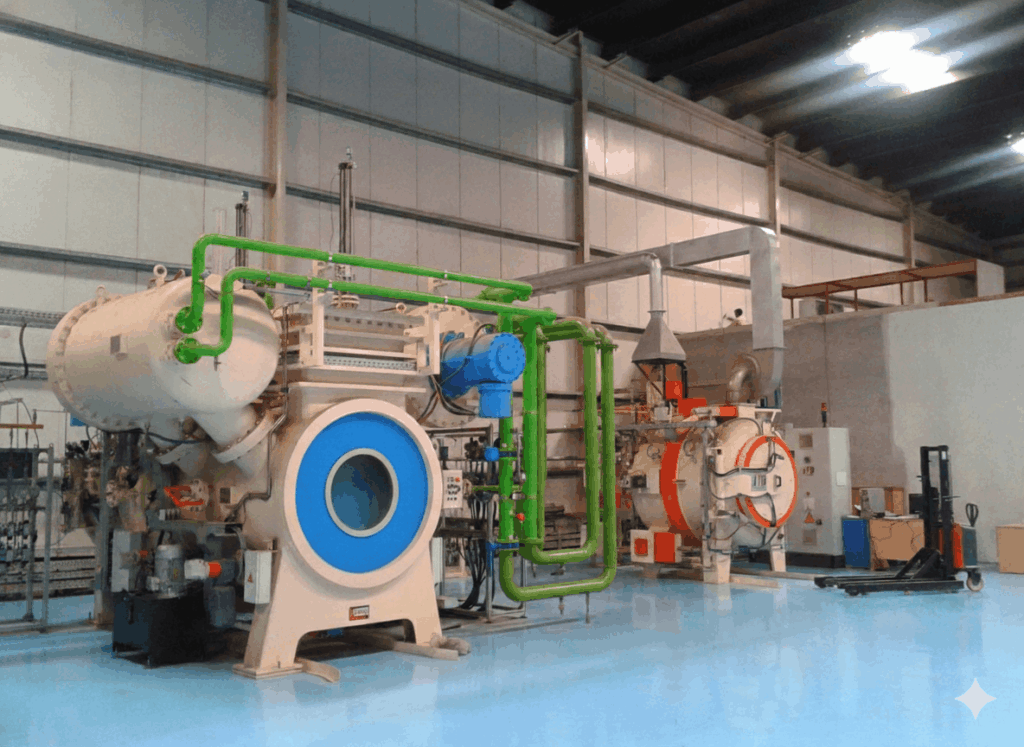

At Infinity Thermotech, carbonitriding hardening & tempering is carried out with metallurgical precision and strict process control, including:
This ensures repeatable quality, minimal dimensional variation, and compliance with industry-specific specifications.
Carbonitriding is a specialized case hardening process similar to carburising, but with the controlled introduction of both carbon and nitrogen into the surface layer of low-carbon or low-alloy steels. Performed at slightly lower temperatures than carburising, carbonitriding creates a thin, hard, and wear-resistant surface case with improved resistance to scuffing and micro-fatigue.
After the carbonitriding cycle, components are rapidly quenched using carefully selected quenching media such as oil or polymer solutions. This rapid cooling transforms the carbon- and nitrogen-enriched surface into hard martensite, while the core remains comparatively soft and tough. This structure is ideal for components that must resist wear while absorbing operational stresses.
While quenching produces high hardness, it also introduces internal stresses and brittleness. Tempering steel after carbonitriding is therefore essential. During tempering, components are reheated to a precisely controlled temperature
Carbonitriding hardening & tempering is particularly suitable for small to medium-sized components
that demand high surface hardness with controlled distortion, such as:
Infinity Thermotech offers a comprehensive range of advanced heat treatment solutions to meet diverse application requirements.
For components requiring deeper case depths and heavy load-bearing capability, explore our Carburising Hardening & Tempering services. Where low distortion and superior corrosion resistance are critical, our Nitriding & Ferritic Nitrocarburising (FNC) processes provide an excellent alternative. For tooling and precision parts demanding clean, oxidation-free hardening, inquire about our Vacuum Heat Treatment capabilities.
Fill all information details to consult with us to get sevices from us
Carbonitriding introduces both carbon and nitrogen into the surface, resulting in a thinner, harder case with improved wear resistance and reduced distortion compared to carburising.
Low-carbon and low-alloy steels such as 1018, 1020, and selected alloy grades are commonly carbonitrided. We provide material suitability consultation.
Typical case depths range from 0.1 mm to 0.75 mm, making it ideal for precision and thin-section components.
Yes. Due to lower processing temperatures and shallower case depths, carbonitriding generally results in better dimensional control.
Tempering relieves stresses from quenching, improves toughness, and ensures reliable long-term performance.