
Annealing & Solution Annealing
- Home
- Annealing & Solution Annealing
Restoring Ductility, Machinability & Corrosion Resistance with Metallurgical Precision
In modern manufacturing and fabrication, metal components often undergo extensive forming, welding, machining, and cold working. These processes introduce internal stresses, hardness variations, reduced ductility, and microstructural imbalance, which can negatively affect component performance, dimensional stability, and service life. Annealing and Solution Annealing heat treatment processes are essential metallurgical solutions designed to restore material properties, improve workability, and ensure long-term reliability.
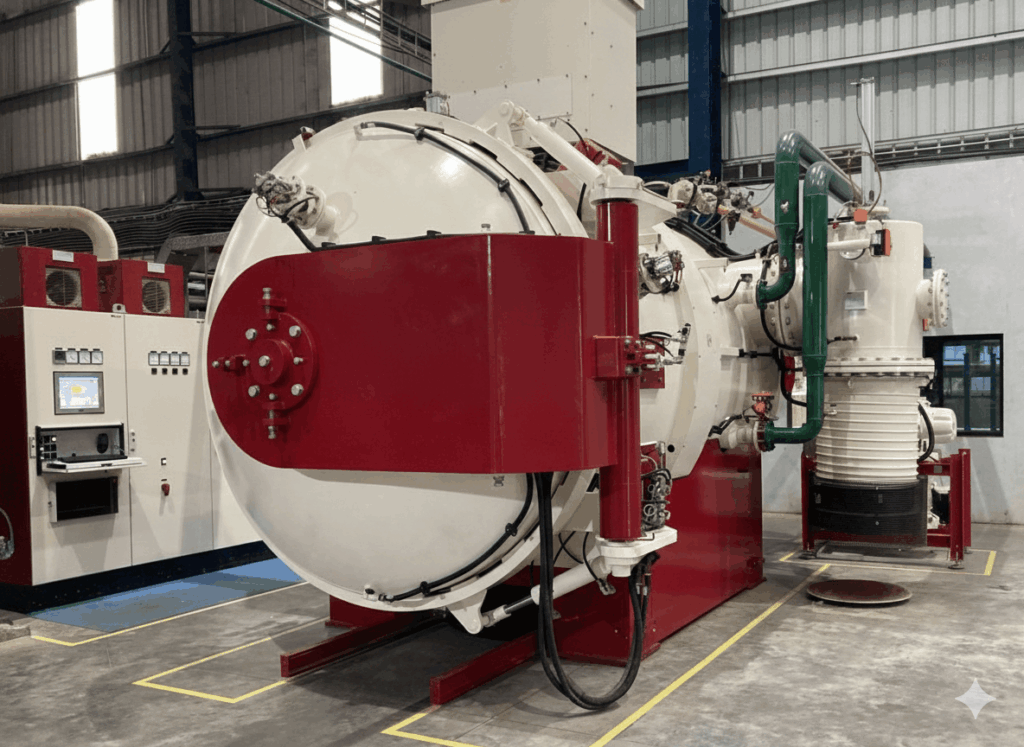
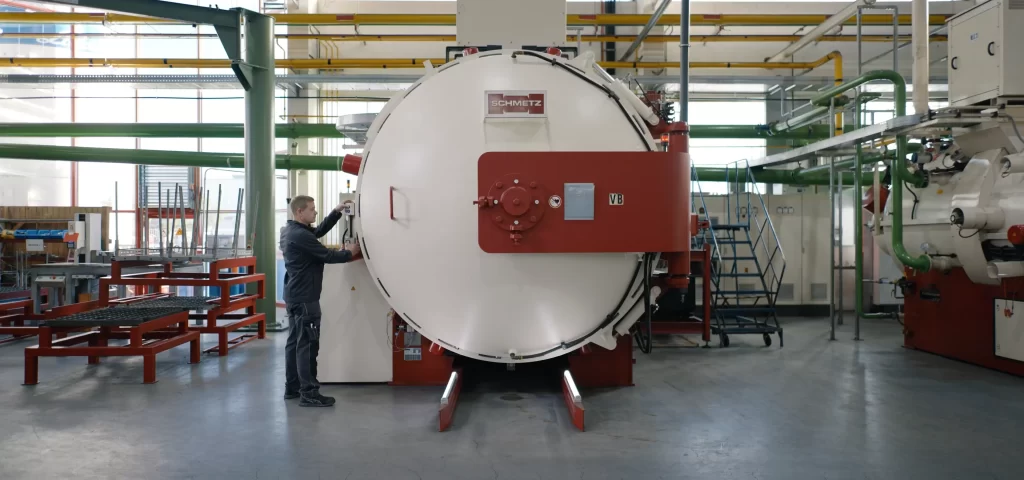
Annealing & Solution Annealing Process at Infinity Thermotech Solutions Private Limited
At Infinity Thermotech, annealing and solution annealing are carried out with strict control over time, temperature, and cooling rates to ensure consistent and repeatable results.
Our process control includes:
- Uniform furnace temperature distribution
- Controlled heating and soaking cycles
- Optimized cooling methods based on material grade
- Metallurgical monitoring to meet industry specifications
Whether the goal is softening for machining, stress relief, or restoring corrosion resistance, our approach ensures dimensional stability, uniform properties, and reliable performance.
The Science Behind Annealing & Solution Annealing
What is Annealing?
Annealing is a heat treatment process in which metal components are heated to a specific temperature, held for a defined time, and then cooled in a controlled manner—usually slowly. The primary objective of annealing is to soften the material, relieve internal stresses, refine grain structure, and improve ductility and machinability.
What is Solution Annealing?
Solution Annealing is a specialized annealing process primarily used for stainless steels, nickel alloys, and corrosion-resistant alloys. In this process, components are heated to a high temperature where alloying elements dissolve into a solid solution, followed by rapid cooling (usually water quenching) to retain this uniform microstructure.
Applications of Annealing & Solution Annealing
Annealing and solution annealing are widely used across industries for both process improvement and final property enhancement.
- Welded fabrications and assemblies
- Shafts, bars, and forgings
- Stainless steel pipes and fittings
- Pressure vessels and heat exchanger components
- Valves, flanges, and fasteners
- Machined and cold-worked parts
Key Benefits of Annealing & Solution Annealing
Stress Relief & Dimensional Stability
Eliminates residual stresses from welding and machining.
Improved Ductility & Formability
Enables further forming, bending, or machining operations.
Enhanced Corrosion Resistance
Especially critical for stainless steels after welding or cold work.
Uniform Microstructure
Improves consistency and predictability of mechanical properties.
Extended Component Life
Reduces risk of cracking, distortion, and premature failure.
Annealing vs Other Heat Treatment Processes
Annealing and solution annealing are often selected as preparatory or restorative processes, rather than hardening treatments. For applications requiring high surface hardness and wear resistance, Carburising Hardening & Tempering is more suitable.
Where components demand excellent wear resistance with minimal distortion, Nitriding offers an effective surface hardening alternative. For applications requiring combined wear resistance, fatigue strength, and corrosion protection, Nitrocarburising provides an advanced thermochemical solution.
Infinity Thermotech offers all these heat treatment services under one roof, enabling customers to select the most appropriate process based on application, material, and performance requirements.
Why Choose Infinity Infinity Thermotech Solutions Private Limited
- Proven expertise in annealing and solution annealing processes
- Controlled furnaces and repeatable heating cycles
- Capability to handle carbon steels, stainless steels, and alloy steels
- Technical support for process selection and optimization
- Reliable turnaround for prototype, batch, and production volumes

Get In Touch
Fill all information details to consult with us to get sevices from us
FAQs About Annealing & Solution Annealing
Q1. Is annealing required after welding?
Yes. Annealing or solution annealing helps relieve welding stresses and restore mechanical and corrosion properties.
Q2. Does solution annealing improve corrosion resistance?
Yes. It dissolves carbides and restores corrosion resistance, especially in stainless steels.
Q3. Can annealing reduce hardness for machining?
Yes. Annealing significantly improves machinability by reducing hardness and internal stress.
Q4. Is quenching required in solution annealing?
Yes. Rapid cooling is required to retain the uniform solid solution structure.
Annealing and Solution Annealing play a critical role in restoring material integrity, improving manufacturability, and ensuring long-term performance of industrial components.